
Our Stage Blog!
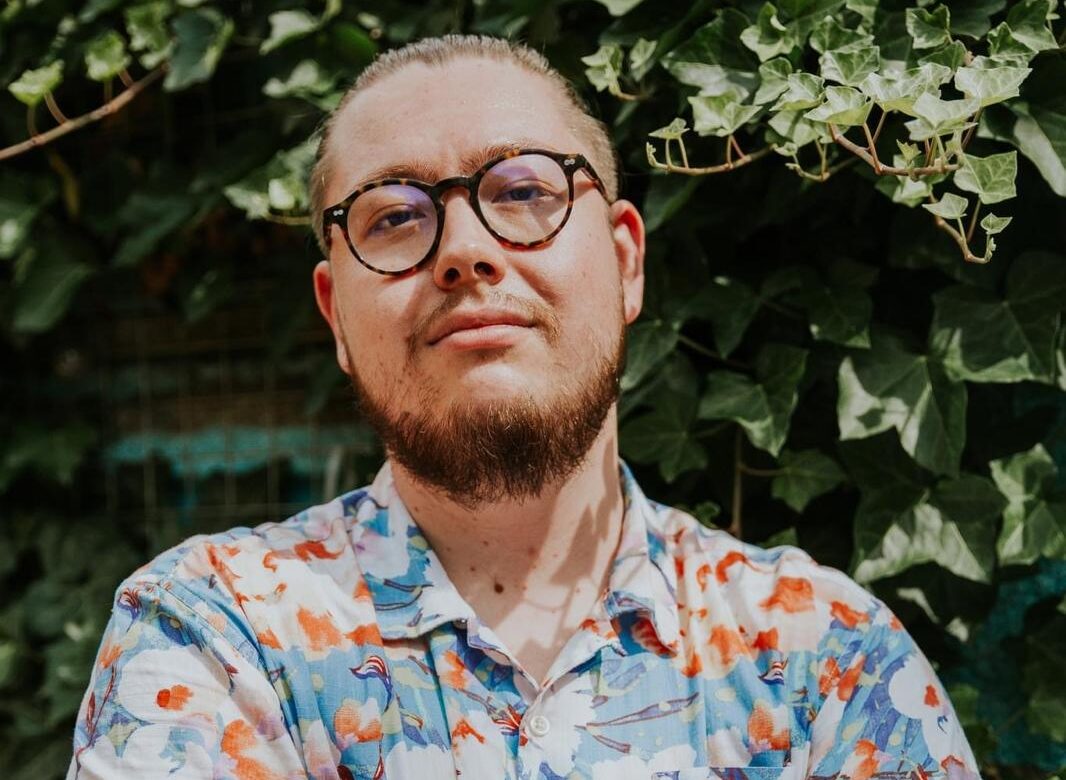
Mark-Cristopher Demeter - stepping into different realities!
Exciting news for theatre lovers! The brand-new premiere of the 10th edition of Drama 5 is just around the corner. "Flower Hill" is a wonderful show based on the play developed by Calița Nantu during her residency, and brought to life on stage by Mark-Cristopher Demeter. To give you an insider's peek into the creative process, we caught up with the show's director for a quick and lively chat!
1. What are you working on right now? What is the context of your artistic exploration? Is there something specific that truly excites you in your work as a director?
Mark-Cristopher Demeter: Right now, I am happily working on the play entitled, just like the text it's based on, "Flower Hill," written by the talented Calița Nantu. In this project, I am trying to discover a theatrical language unique to both the script and the space. It’s grounded in realism, but not in the sense of simply copying or creating an illusion of reality. Rather, it's about playfully uncovering the paradoxical, surreal, and truly magical sides of reality! Reality itself is a conventional concept, but I genuinely believe each person has their own reality, which can differ beautifully and enormously from someone else's—even someone they share their life with.
2. You are a wonderful young director and have already enjoyed all kinds of fantastic stage experiences, in both state and independent theatres. You have often worked with the devised theatre method, but now at Drama 5, you are working with a fully written, dramatic text. Does your role as a director change when you take on this kind of adventure?
M.-C. D.: Absolutely! It’s a wonderfully fresh situation for me because, until now, I’ve either worked on devised pieces or on texts written by playwrights who have been gone for at least 20 years. Having the playwright right there next to you is a fantastic advantage! It helps you dive so much deeper into the story, and it even allows you to write or rewrite parts of the text to perfectly suit the magic of the show. I don't think the core role of the director changes fundamentally, but it certainly brings a whole new, exciting set of responsibilities and needs!
3. What do you hope to get out of the rehearsal process? Can we talk about a specific approach or aesthetic style that you are bringing to life in "Flower Hill"?
M.-C. D.: Mihai proposed a wonderfully powerful visual and theatrical space that I felt captured the very spirit of the text! It pushed me toward an aesthetic I had imagined even before seeing the space, which made me so happy. Defining the show's aesthetic is a bit of a fun challenge (at least for now), but I think that mystery actually helps us! If I had to define the approach, I'd say it's a delightful search for that liminal space—as Calița beautifully put it—between reality and dreams. When I say dream, I mean it in a broader sense that includes the afterlife, death, and so on. Dreams have their own wonderful logic that doesn't apply to reality, and vice versa. Just like a person has their own reality with its own logic, and sometimes that logic doesn't apply to someone else's world. Maybe it’s not quite like that, but it is so exciting to imagine that this is exactly where inventions, conflicts, and revelations are born!
4. You are used to working in both Romanian and Hungarian, which is wonderful! What interesting challenges did you face in unlocking this text? It’s such a rich script with a slightly supernatural universe, yet it speaks very concretely about a generation that experienced a specific social-political context, using some highly recognizable references.
M.-C. D.: The fun thing about working in two languages is that I have a different way of thinking in each of them! It’s fascinating to start thinking about a theme in Hungarian, and then if I start exploring the same theme in Romanian, I end up somewhere completely different with totally new thoughts. Of course, the linguistic "barrier" is there, but it's easy to... what's the word... leap over! I wouldn't say I had trouble deciphering the text because it’s in Romanian, but rather because I think in Romanian about this text, and sometimes I feel it’s great to switch the voice in my head to Hungarian to spark different ideas. Though sometimes, what's born in Hungarian doesn't have quite the same charm in Romanian, if that makes sense! Basically, I think I understand this text through a lens that is a bit distant from me, which makes me feel that distance. But distance isn't a bad thing at all... it just gives you room to get closer!
5. How do you think the audience will receive this show, both in its form and its story?
M.-C. D.: I have no idea, and I don't even think about it! :)) But I am absolutely sure there is plenty of room for everyone to find something they love and resonate with. The nostalgic vibe of the 2000s combined with a cool, modern present-day style is the backdrop for the Cherecheș family drama. I believe the original intent of the play remains beautifully intact. Of course, bringing it to the stage sometimes requires some lines to be rewritten or cut, but that's just part of the natural, exciting process of making theatre!
6. How does the blend between the show's physical form and the content of the play look to you? Have you discovered exciting new things through your collaboration with the artistic team?
M.-C. D.: Yes, and I think that’s the most beautiful part of any creative journey—discovery! I rely a lot on the team and have maximum trust in everyone, because I truly believe that's the only way to collaborate and keep our spirits curious. Curious about everything! Blending a form in progress with a script that is already written is a great challenge, but I believe that's exactly where unexpected, brilliant artistic solutions are born. I believe in the joy of spontaneity and in keeping the doors wide open when it comes to both form and content!
This wonderful show is produced within the project "Drama 5. 10th Edition," proudly co-financed by the National Cultural Fund Administration. The project does not necessarily represent the position of the National Cultural Fund Administration. The AFCN is not responsible for the content of the project or how the results of the project may be used. These are entirely the responsibility of the beneficiary of the funding.
A cultural project proudly funded by the Ministry of Culture and the Cluj County Council.
Project realized with the fantastic support of the Cluj-Napoca City Hall and Local Council.
