
Our Stage Blog!
Point Nemo: Co-creating a bright new future together!
This April, we are absolutely thrilled to present Reactor's very first international co-production, alongside the Cluj Cultural Centre, Pogon (Zagreb, Croatia), and L’arboreto – Teatro imora (Mondaino, Italy) as part of the exciting project Stronger Peripheries: A Southern Coalition!
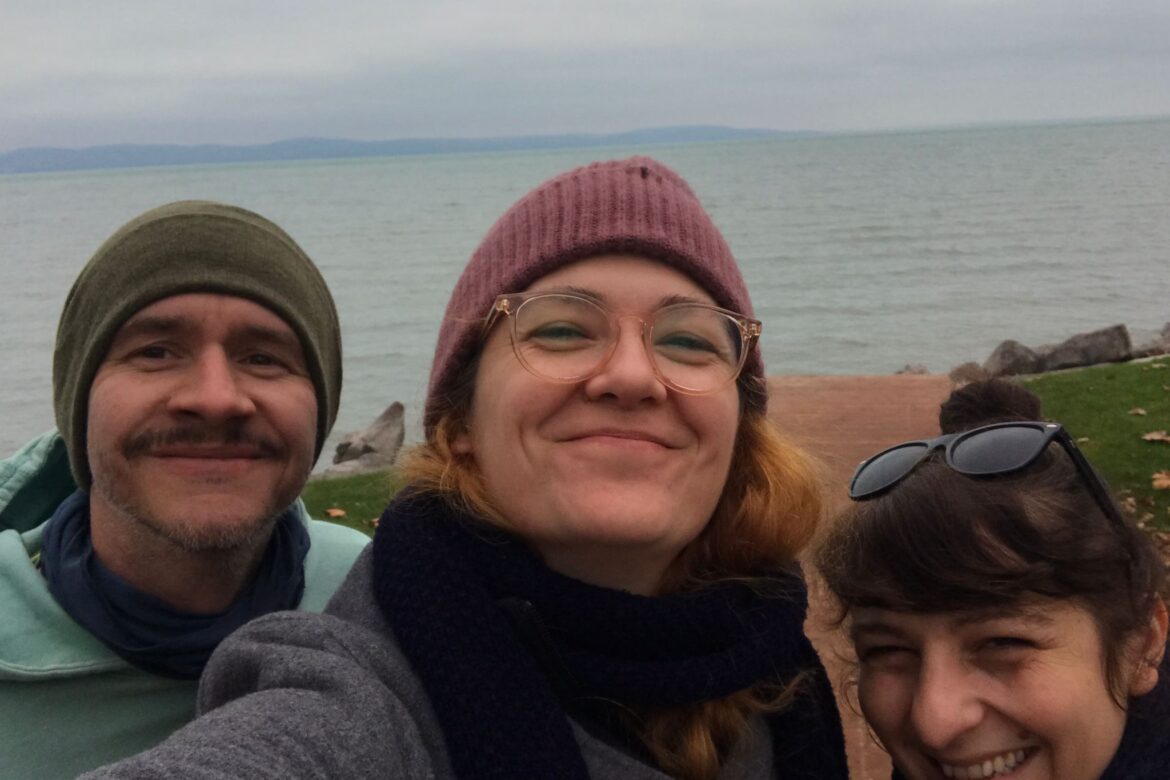
To find out more about the wonderful creative process behind the performance "Point Nemo", we sat down for a lovely chat with Catinca Drăgănescu, Oana Hodade, and Mihai Păcurar, who have formed a fantastic conceptual trio right from the start.
You started the work process for this performance in a rather special context compared to other projects at Reactor, enjoying international support. How was this first stage of work for you, with the wonderful research and creation residencies hosted in Zagreb and Mondaino?
Catinca Drăgănescu: What really drew me to this project was precisely the artistic research component, the wonderful freedom that this kind of working formula gives you to explore new territories—areas you dream of but are sometimes a bit hesitant to test in practice. The experience of the two residencies was absolutely extraordinary; they were two fertile periods of inspiration and exploration! They brought the team together beautifully and served as wonderful incubators for ideas. We met lovely people with fascinating perspectives, had the chance to shape and test our ideas, and it truly felt like a wonderful laboratory for us.
Oana Hodade: I think the absolute best and richest part of the two residencies was engaging directly with a multitude of ideas and perspectives about the future. We had many wonderful encounters with people whose life experiences challenged our own views on the theme. In a truly beneficial way, the warmth of these meetings kept the research in a deeply humanistic space rather than a purely theoretical one.
Mihai Păcurar: Both stages of the project were incredibly eye-opening for me! The chance to meet and chat with active people from the civic sector and fellow artists is a unique opportunity to explore the dedicated, almost invisible work that holds entire communities together. And I must include here the wonderful representatives of our partner organizations who hosted us and offered us these fantastic experiences.
How did working together go, considering that you set out to design the artistic concept in a rather non-hierarchical way? What fun challenges or rewards popped up, and how did your roles evolve? How does this collaborative approach shine through in the performance itself?
Oana Hodade: We happily kept the non-hierarchical principle alive even after Alexandra, Adonis, and Selma joined us, and we stayed true to it right to the end! We divided tasks and individual things to do, each in our own area of expertise, but we always came back to group decisions for the creative content. In fact, choice is a core concept at the very heart of our performance!
Mihai Păcurar: I think we created a wonderful, harmonious space for sharing ideas and building structures together. We all wore many different hats during these meetings, and I think the real challenges have only popped up now, towards the end, as we try to keep ourselves lively and playful while we each settle into our own professional cockpits!
Catinca Drăgănescu: I jokingly called our working process a performative utopia! I wondered how co-creation could work when every single participant is stepping slightly outside their comfort zone and area of expertise. I think it was a wonderful decision! The project now has this magical, spectral quality of expressing multiple viewpoints. And the sheer abundance of ideas sparked by this freedom makes it rich, spirited, and delightfully eclectic in places. It feels like the perfect tone of voice! We learned so much from one another, and this vibrant exchange of ideas and energy is something truly special that will really power the show.
What are your hopes for this process and this performance, which is described as being highly interactive? What does this style of show bring to the main theme – the right to a future?
Mihai Păcurar: I think our goal is to see if active participation is a beautiful step towards leaving a lasting impression on our audience, and to gently spark the idea of active participation in society as a whole!
Catinca Drăgănescu: We want to create an experience rather than just a show—an exciting interactive adventure that invites the audience not only to ask questions but also to take action in various ways! It's designed to be highly entertaining while also touching a personal chord and sparking the audience's critical thinking. It’s a wonderful out-of-the-box experience where theatergoers become the main protagonists and co-creators of the show, because thinking about the future means stepping into our role as creators. I truly believe that the future is ours to make, and we have both the privilege and the joy of contributing to it!
How can we talk about the future today? The title of the performance refers to a remote, isolated place that is hard for humans to reach – is that a good thing or a bad thing?
Oana Hodade: It is... what it is! Sometimes a blank page or a remote, isolated place can be the perfect starting point to imagine a beautiful new beginning.
Catinca Drăgănescu: I'll say it again: with responsibility! I believe that's how we should look at the future, but also with lots of courage! The present moment is also an incredible opportunity for imagination. It's neither good nor bad—it's whatever we choose to make of it, as long as we choose to be active players in the grand global transformation ahead of us!
Mihai Păcurar: I think if the Earth were flat, Point Nemo would be the very edge of it—that spot you visit every now and then to gaze into the void and give yourself a refreshing reality check!
