
Our Stage Blog!
Radu Jude - on the magic of theater and film!
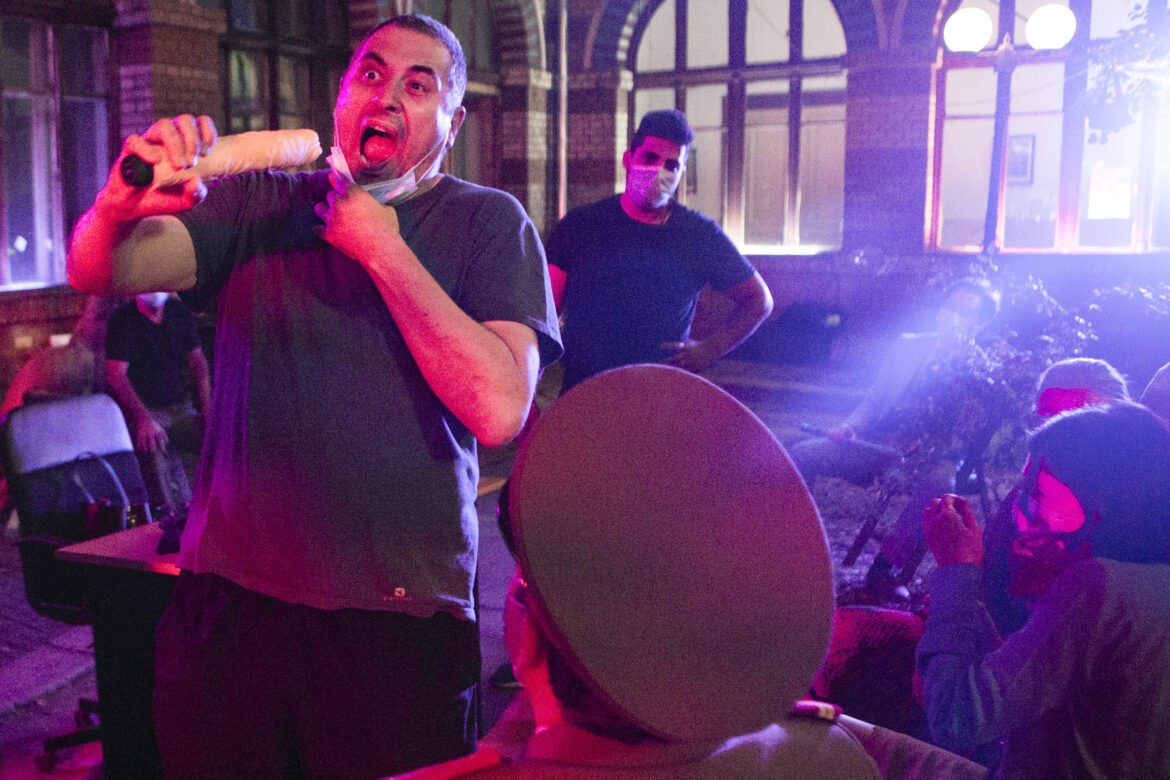
Starting with the second half of 2022, Reactor launched "Intersections" – an exciting multi-annual artistic program focused on the beautiful crossover between theatrical and cinematic mediums! This project features theater shows that creatively embrace film language, movie screenings highlighting the dialogue between stage and screen, lively discussions with participating and guest artists about these creative intersections, and a wonderful theater and film workshop led by director Radu Jude with the Reactor team (held between November 2022 and January 2023). We caught up with Radu Jude to ask him a few questions about this incredibly vast and inspiring theme.
How do you see the relationship between theater and film?
I'm quite primitive in my thinking, which is why I only see the extremes! That is, I either feel that theater and film fundamentally have absolutely nothing in common, or I see all arts as being one and the same (with the differences between them becoming quite insignificant from this perspective). Both views feel completely right to me, and I find myself leaning toward one or the other depending on the context.
From your perspective, how do theater and film influence each other, and how have they influenced your own artistic work?
Just like the question above, this one is much too broad to give a simple answer! As for me, I am deeply drawn to theater for aspects related to dramaturgy and acting, but most of all for everything regarding mise-en-scène and the incredible freedom that theatrical convention offers. Paradoxically (or maybe not!), the abundance of tools that cinema has at its disposal doesn't always bring more freedom; often, it leads to much more rigid conventions than you would find in theater, painting, or literature. Without the wonderful influence of theater, some of my films simply wouldn't exist (which might not have been a bad thing!) or they would have been much more aesthetically cluttered.
Your films showcase a certain kind of theatricality, mostly in a Brechtian style. What led you to this direction, and what does it mean to you?
I don't know exactly what "theatricality" means; for me, there is only cinema! In the sense that cinema is about capturing reality with a camera and transforming that reality into moving images. To me, that is the core magic of it all, and under this big umbrella of cinema, everything can fit beautifully—including a style of acting or dramaturgy that some might call "theatrical."
What do you hope to discover through this wonderful meeting between your cinematic experience and the practice of independent theater artists like those at Reactor?
One of the most exciting developments—historically, but especially in recent years—has to do with the democratization of film production! Just as it is relatively easy to grab a pencil and paper to write a poem, or a brush to paint a canvas, it is becoming easier than ever for everyone to make movies: using mobile phones, affordable video cameras, and so on. The fact that the so-called "film industry" and its institutions (funding bodies, cinema chains, streaming platforms, or film festivals) are still resisting these forms is just a temporary phase. I am absolutely convinced they will eventually be welcomed with open arms! Of course, I realize this doesn't automatically mean we will have an explosion of brilliant filmmakers—the world didn't suddenly fill with extraordinary painters just because anyone can buy brushes at the bookstore. But I would be absolutely thrilled if this workshop inspires some of the participants to start making films, if that's what they dream of doing. They shouldn't hesitate for a second, even if they are labeled "amateurs." As Eric Satie so wonderfully put it: “Et d’une seule voix je crie: Vive les amateurs!”
"Intersections" is a multi-annual cultural program co-funded by the National Cultural Fund Administration.
The program does not necessarily represent the official position of the National Cultural Fund Administration. The AFCN is not responsible for the content of the program or how its results may be used. These are entirely the responsibility of the grant recipient.
